
Description
Camponotus turkestanicus, the Turkestan carpenter ant, is a massive yet remarkably graceful inhabitant of the steppe. Antkeepers value this species for its boundless energy and the ingenuity its workers show during cooperative foraging: a well-coordinated foraging team in the outworld is a real spectacle.
A Home Deep in Steppe Soil
In the wild, this species digs its nests deep into dense soil, sheltering from the punishing heat of arid regions. A branching network of underground tunnels reaches far below the surface, and at different depths it creates stable microclimate zones where the colony raises its brood. That is why a captive colony also needs a nest with clear zoning into more humid and drier areas.
Native range:
- Afghanistan
- Georgia
- Iran
- Kazakhstan
- China
- Russia
- Turkmenistan
- Uzbekistan
Don't Confuse It with Camponotus turkestanus
Because the names sound so alike, this species is very often mistaken for Camponotus turkestanus, especially by beginners. Although the ranges of the two ants may partly overlap, they are separate species, each with its own morphology and care requirements. The vivid reddish sheen on the thorax helps identify C. turkestanicus, but the Latin name remains your main reference when buying: check it letter by letter.
Looks and Castes
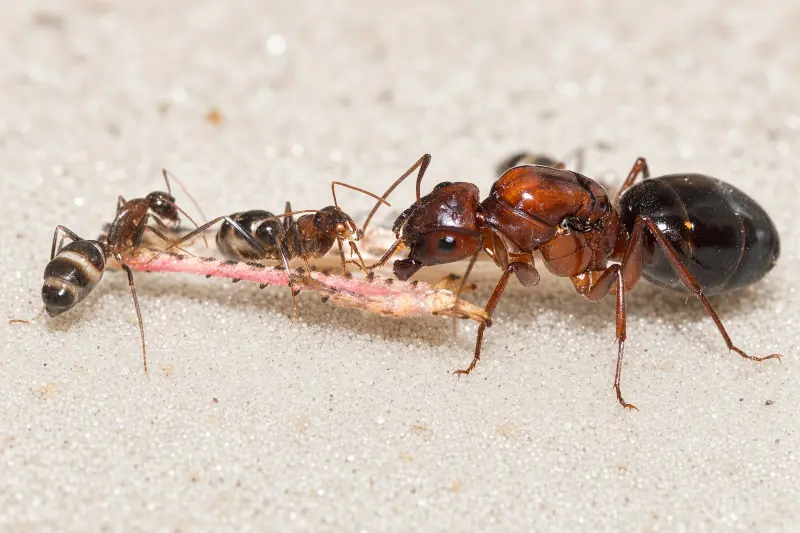
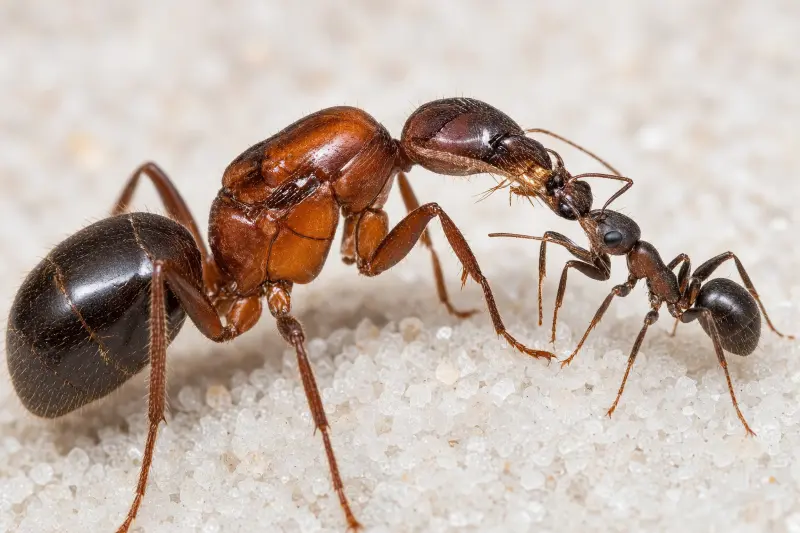
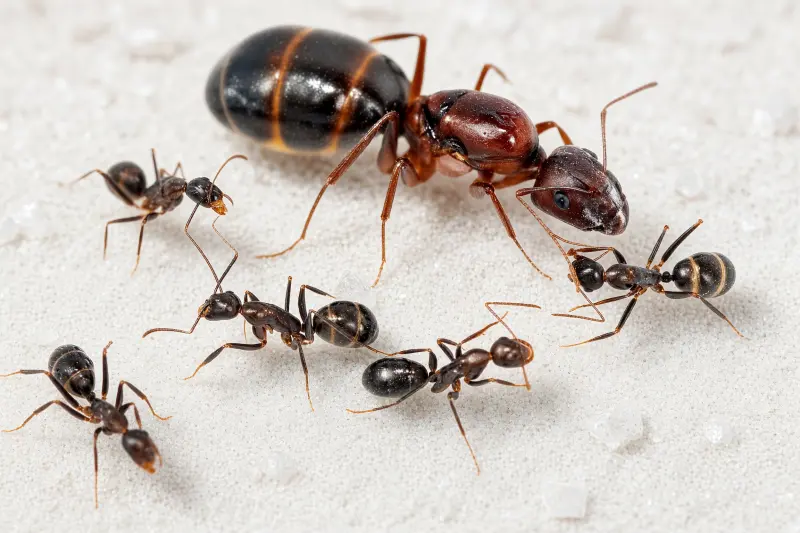
The colony is polymorphic, so a strict hierarchy takes shape inside the nest: workers and soldiers differ dramatically in size. Soldiers carry powerful mandibles and take charge of breaking down large food items. The coloration is truly mesmerizing: an anthracite-black head and a smooth, glossy gaster contrast strikingly with a thorax that shimmers in deep reddish and burgundy tones.
As in other members of the genus Camponotus, the larvae of this species sometimes pupate without spinning a protective cocoon. Workers carefully clean these naked pupae, and this brood care is fascinating to watch.
Body sizes:
- Queen: 16–18 mm
- Workers: 6–12 mm
- Soldiers: 12–15.5 mm
Choosing the Right Nest
For such large ants to feel comfortable, the artificial nest has to be chosen with particular care. Thin, cramped acrylic setups are not suitable for this species. What it needs is a spacious farm that holds a proper humidity gradient and reproduces conditions close to the natural ones. The brood develops in a humid environment, so the colony will do well in a quality farm with a partial plaster base: the ants will carry their larvae to wherever conditions suit them best.
A smart technological option is a farm with a self-contained water tower column. It distributes moisture evenly and minimizes the risk of flooding the chambers.
Technical Requirements
What to check when choosing a nest:
- Passages above the plaster: from 15 mm. This is essential for soldiers and the queen to move freely. In flatter systems, colony growth quickly comes to a halt.
- Plaster in the chambers: 6 to 15 mm. A thick moisture-retaining layer stores water properly and keeps the nest from drying out.
- Starting out: an incubator mini-module with 10 mm plaster. It gives the queen and her first workers a safe place for the earliest stage of colony life.
- Moving: once the colony numbers several dozen individuals. From that point on, it is time to relocate to a permanent nest.
- Permanent home: a 220×110 or 200×200 farm. The larger format gives the ants a generous foraging area.
Feeding the Colony
The ants draw energy for their busy lives from carbohydrate food. The staple of the diet is pure honey syrup mixed at one part honey to three parts water. Offer it in tiny droplets on foil so that the large, somewhat clumsy individuals do not accidentally drown.
Protein is a must: feeder insects are vital for steady egg-laying by the queen and vigorous larval growth. Turkestan cockroaches, crickets and mealworms make excellent protein sources. Always crush live prey before placing it in the outworld so it cannot injure the ants.
Frequently Asked Questions
Can the colony be kept in an acrylic farm without a moisture block?
No. These large ants need a spacious farm with passages of at least 15 mm above the plaster and a moisture-retaining plaster layer of 6–15 mm in the chambers. Without that base, the larvae dry out quickly, and a disrupted microclimate can wipe out the entire colony.
How does this species differ from ants with a similar name?
Beginners most often confuse it with Camponotus turkestanus. C. turkestanicus shows clearly visible reddish highlights on the thorax. Since these are separate species with different needs, always double-check the Latin spelling when buying.
How often should syrup and insects be offered?
Offer fresh honey syrup every 2–3 days in tiny portions. Feeder insects are needed for brood development, so an actively growing colony gets them 2–3 times a week, always crushing the prey first.